
International student employability
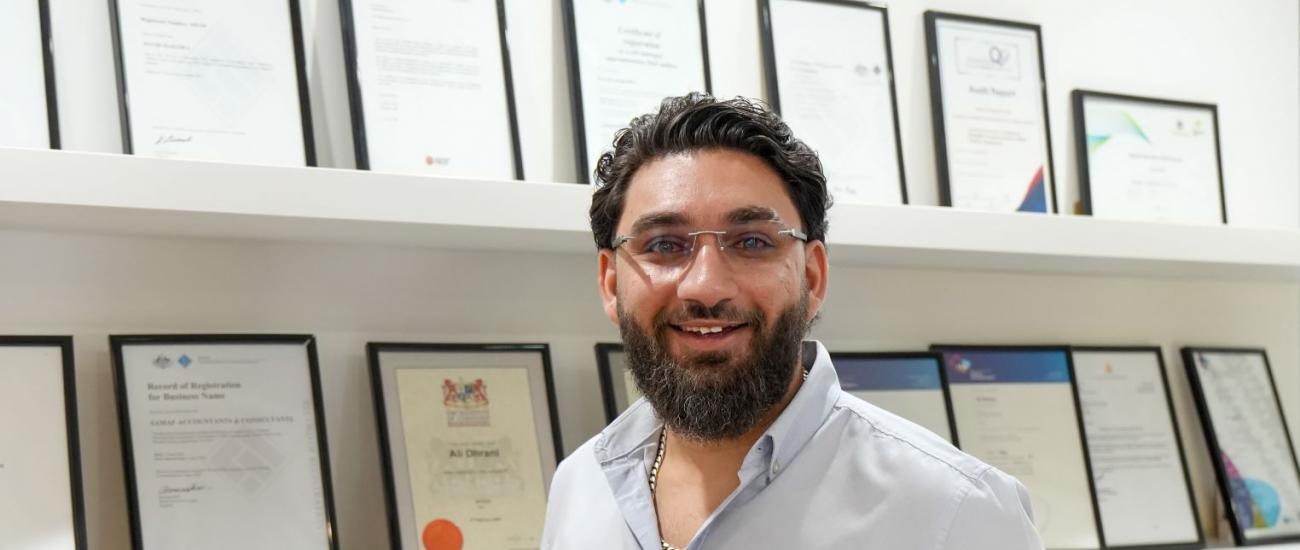
From filling skills gaps to building new businesses, international students are playing a growing role in the Northern Territory’s economy. Few stories illustrate that impact better than Ali Dhirani’s.
Ali Dhirani’s journey from refugee to successful NT business owner reflects a quieter story unfolding across the Northern Territory — one shaped by international students who arrive seeking opportunity and end up strengthening the Territory’s workforce and communities.
Part of what makes the Northern Territory so unique is the historical contribution of migrants from across the world.
As we move further into the 21st-century, the Northern Territory continues to grow with people from a multitude of other countries contributing to the make-up of a very cosmopolitan region.
In the past 25 years, some who have made the NT home are, or once were, international students. They are people who have taken the chance to improve their lives, their education and their employment skills with the help of the NT Government’s Study NT Program.
Ali Dhirani, 32, was one of those international students. He was born in Pakistan to a Pakistani mother and Tanzanian father with roots in the Middle East and India.
He was once a refugee and is now a successful, multi-award winning business owner encouraging other business owners to invest in international students.
The first thing he says to business owners about employing international students is “just give them the opportunity”.
“Any international student is feeling very, very privileged to be here,” he said.
“They are very passionate, they’re very resilient, hard working and happy to do anything just to get the opportunity to contribute.
“For a business owner to give them the opportunity to work, to give them a 1% chance, they will get 99% back.”
Ali speaks from first-hand experience. He arrived in Darwin in 2016, suffering from PTSD after being captured in the Democratic Republic of Congo during the civil war of 2012-13.
He was just 18 and it was a case of being in the wrong place at the wrong time. Ali was only in the Congo to work in the family’s secondhand clothing business.
“One Saturday afternoon, I hear bombs next to my house. We had to run. I was caught with the rebels,” he said.
A Rwandan friend who had survived the Hutu-Tutsi genocide in 1994 knew what could have happened if Ali remained in the Congo. He eventually helped Ali to escape into Rwanda where Ali remained a refugee until the Tanzanian embassy could return him to Tanzania.
Once back in the Tanzanian city of Dar es Salaam, Ali decided to start life over. He worked in a bank where he came into contact with successful businessmen with families. He also had solid role models in the community - men who were community-minded, family-oriented and financially successful. His mother also worked multiple jobs, showing him the value of effort and outcome.
Ali realised that financial freedom was his ultimate goal.
Then his world completely changed in 2016. His uncle had just moved to Darwin as part of the Inpex boom and suggested he might want to check out the city.
“I’d come from the hustle and bustle of a big city. I really needed to get away. I needed mentally to be a bit free also.”
Ali moved across the world and worked multiple jobs as a cleaner, on market stalls and as night receptionist at a backpacker’s hostel while studying at Charles Darwin University. He’s a bit of a whiz at Excel and soon streamlined the hostel’s paperwork, adding immeasurable value to the business because they ”just gave me the opportunity”.
In 2019, he gained a Bachelor of Accounting degree from CDU and worked remotely as an internal auditor with a Sydney firm.
He also volunteered in the community and co-founded the Kindness Shake – a community and student-led non-profit organisation supporting and focusing on international students, migrants, refugees and temporary visa holders experiencing financial difficulties. The Kindness Shake also provides social engagement and welfare/wellbeing improvement opportunities.
Coming from a background where constant electricity and running water were not guaranteed, where poverty was common and education opportunities limited, Ali believes he has a responsibility to give back to a place that has given him so much.
His own work, study and community experience is also why he speaks with such authority about the value international students can bring to NT businesses.
Ali encourages employers to attend Study NT’s annual International Student Career and Job Expo and find out firsthand about the benefits of an international student workforce.
“When you really want to tell how skilled someone is, being able to have a quick chat with them, giving them the opportunity to give you their elevator speech about themselves, you will be able to make some really good decisions,” he said.
Ali has put his own money where his mouth is by establishing Top End Maintenance, which provides jobs in the cleaning and maintenance industries for people from other countries, domestic violence survivors or people struggling to find work.
Top End Maintenance has helped over 50 families to find jobs and contribute to the economic and social fabric of the NT.
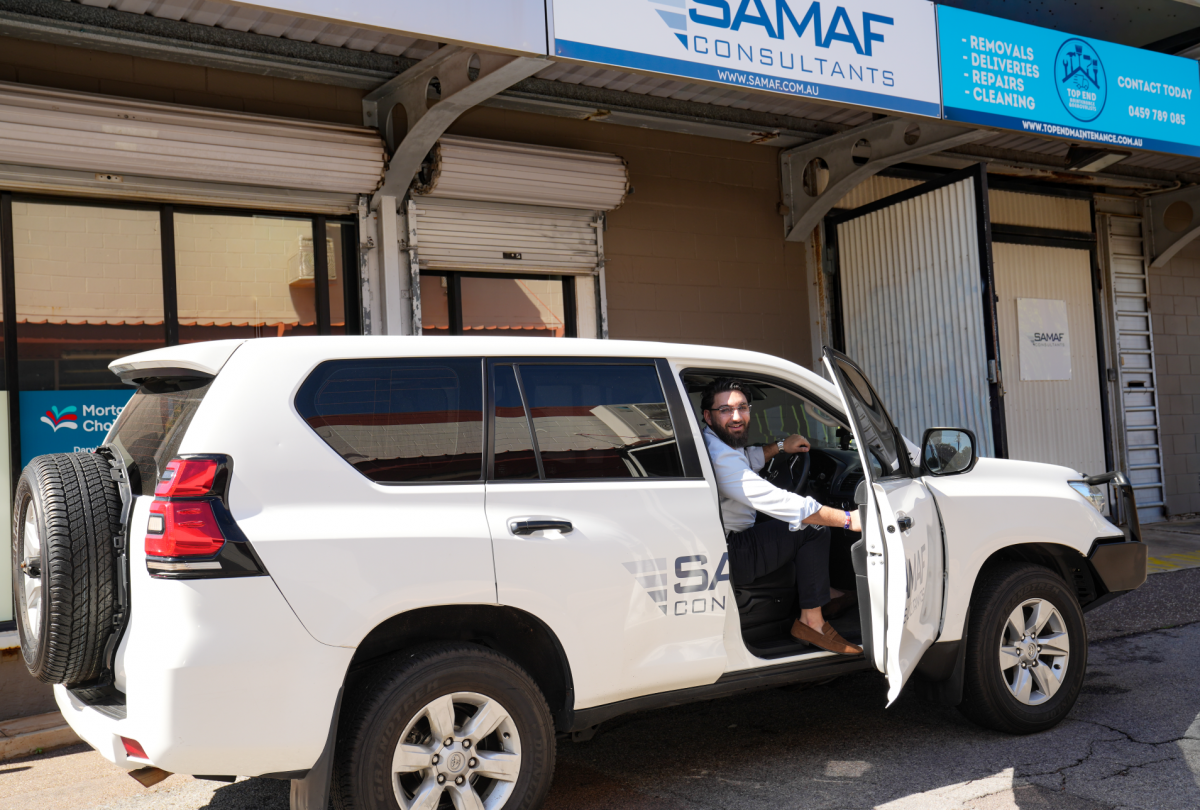
When he started his own accounting business, SAMAF Pty Ltd in 2020, he hired international students. He continues to do so with some going on to work in other firms or move into other roles outside SAMAF, further expanding his contribution to the NT’s skilled workforce.
SAMAF is now an international company with an office in Pakistan, and offices in Darwin, Palmerston, Sydney, Melbourne, Perth and Brisbane.
Ali is married to Malia, an Indigenous woman from Alice Springs, and has a 3-month-old baby. He has come a long way during his 10 years in Darwin.
He is motivated by being able to provide for his family but also by the value of a strong community.
“What drives me is that sense of belonging. It’s that sense of community. When I came to Australia, to Darwin, I realised that community can be so huge.
“Community is not only the people who look like you. Community is not people who speak the same language as you. Community is bigger than that.
“It’s about a bigger network and how proud I am of being a Territorian.”